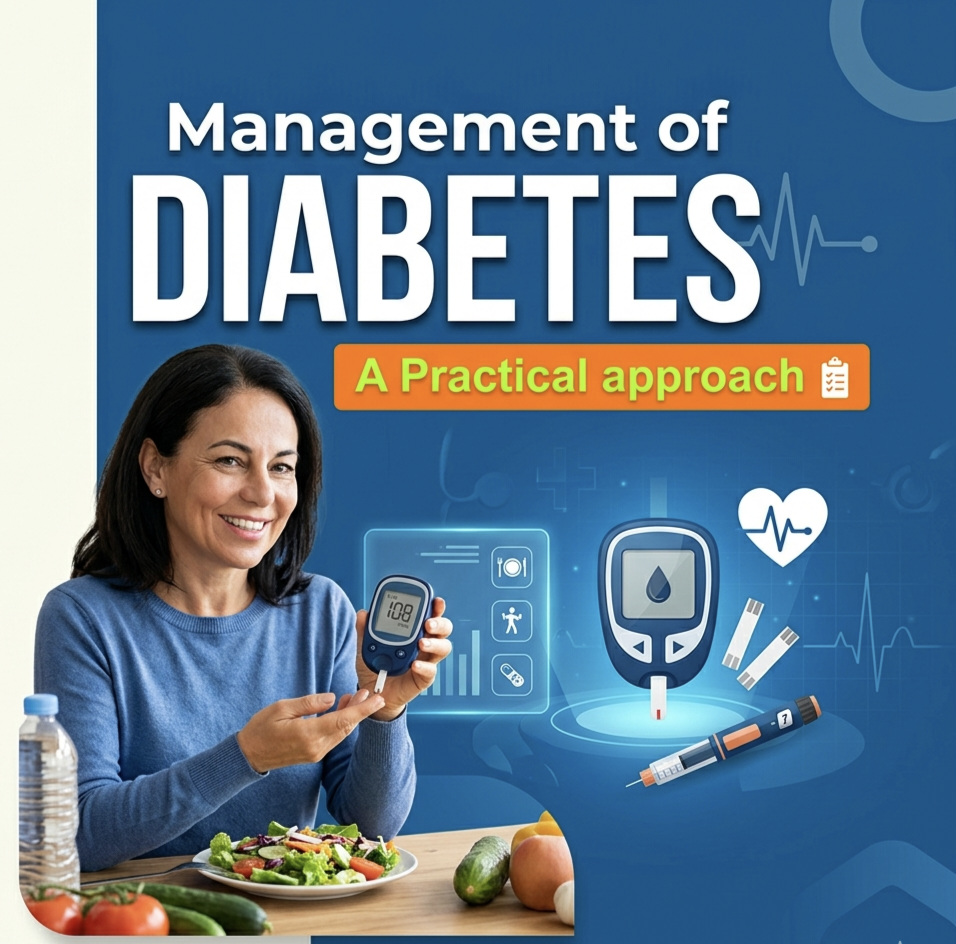
Management of DIABETES | A Practical approach
Type 2 Diabetes Mellitus (T2DM) is a chronic, progressive metabolic disorder driven by a dual pathogenesis: target tissue insulin resistance coupled with a gradual decline in pancreatic beta-cell insulin secretion, ultimately resulting in persistent hyperglycemia.
HOW to Approach a DIABETES Patient
Newly diagnosed T2DM , HbA1c < 8% + no symptoms
↓
Lifestyle modification × 3 months
↓
Not at meeting target
→ START METFORMIN 500mg OD after dinner
↓
Increase to 500mg BD → then 1g BD over 4-8 weeks
↓
HbA1c still not at target after 3 months
↓
ADD second drug based on patient profile ↓
PPBS high → Add Glimepiride or DPP4
FBS high → Add SGLT2i or basal insulin
Obese → Prefer SGLT2i or GLP-1
Heart failure/CKD → Prefer SGLT2i (Empagliflozin)
Cardiovascular risk → Prefer GLP-1 (Semaglutide)
↓
Still not at target → Triple therapy or insulin regularly
FBS & PPBS CORELATION
FBS is high → Hepatic glucose output problem overnight
Best drugs
Metformin (suppresses liver glucose)
SGLT2 inhibitors (continuous glycosuria)
Basal insulin (NPH / Glargine at bedtime)
PPBS is high → Post-meal insulin spike is inadequate
Best drugs
Glimepiride / Glipizide (forces insulin release)
DPP-4 inhibitors (enhances meal-triggered insulin)
Voglibose / Acarbose (slows carb absorption)
GLP-1 agonists (slows gastric emptying)
Rapid insulin (if on insulin therapy)